In this article, you will get detailed instructions on setting up the blog for your Helix Ultimate templates. You will find the blog settings in this area (see the image below). It allows you to enable some display elements such as the social share and author info buttons.
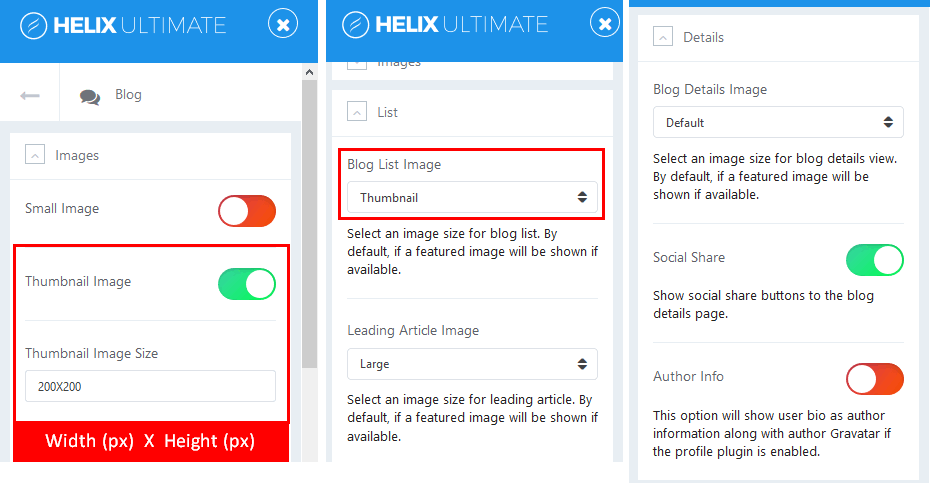
Image by JoomShaper
Images
This option allows you to set the image sizes and resolutions used in different article views.
Crop Quality
Used to set the image quality for better compression of resized images (for JPG images only).
Blog List Image
You can select an image size for the blog list. By default, it will show the featured image if available.
Leading Article Image
It allows you to select an image size for the leading article. By default, it will show the featured image if available.
Blog Details Image
It allows you to select an image size for the blog details view. By default, it will show the featured image if available.
Social Share
Show social share buttons (Facebook, Twitter, LinkedIn, Google+) on the blog details page. By default, they will be shown in the top right corner.
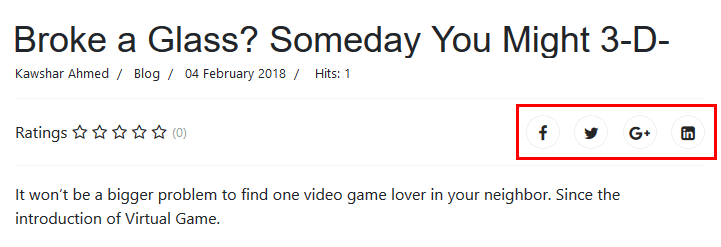
Image by JoomShaper
Author Info
Enable this option if you want to show the author bio along with the author profile image from Gravatar, if the profile plugin is enabled.
By default, images are shown at 64px by 64px. It’s taken from the Joomla user’s email. If an email address has no matching Gravatar image, it will show a blue box with the Gravatar logo inside.
Comments
You can add the IntenseDebate comment system, Facebook comments and / or Disqus Comments to your Joomla website. It allows your readers to log in via their social network and leave a comment under your article.
Make sure you choose and set the correct Facebook Application ID, IntenseDebate Account or Disqus Username/Subdomain. You can use only one selected social comments system or disable it and use your own.
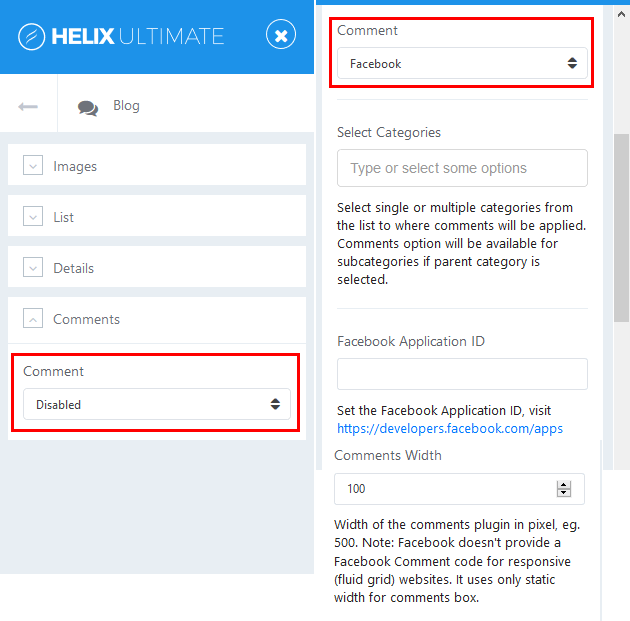
Image by JoomShaper
Disqus Comments has three membership plans, and in the basic one, advertising and sponsored comments are displayed.
- Select Categories – from the list where comments will be applied.
- Comments Width – select the width of the comments plugin in pixels. It uses only a static width for the comments box.
- Comments Count – you can choose to show or hide the comment count on the blog view or front page.
So simple, isn’t it? If you have any questions about this tutorial, don’t hesitate to leave a comment below. And don’t forget to share with your friends if you find it useful! Thanks!