As you know, WordPress and Drupal are among the most popular content management system platforms around the world. But which platform is suitable for your business? If you are also struggling to choose between them, don’t miss this article. This article will help you determine which one is right for your website.
Introduction
Regardless of whether your business is large or small, once you start an online business, you always have to be ready to face fierce competition among businesses, because this is a promising market for e-commerce. So, it is necessary to own a website with the most optimal e-commerce platform that will help you improve the competitiveness of your business.
However, there are now countless e-Commerce platforms on the market. You will surely find it difficult to decide which platform is right for you. WordPress and Drupal are two of the most notable ones. Recently, many users have had trouble grasping the difference between WordPress vs Drupal. For this reason, in today’s blog, we are digging into a WordPress vs Drupal comparison. Now, don’t waste your time. Let’s check the following sections out.
WordPress Vs Drupal: Background
WordPress
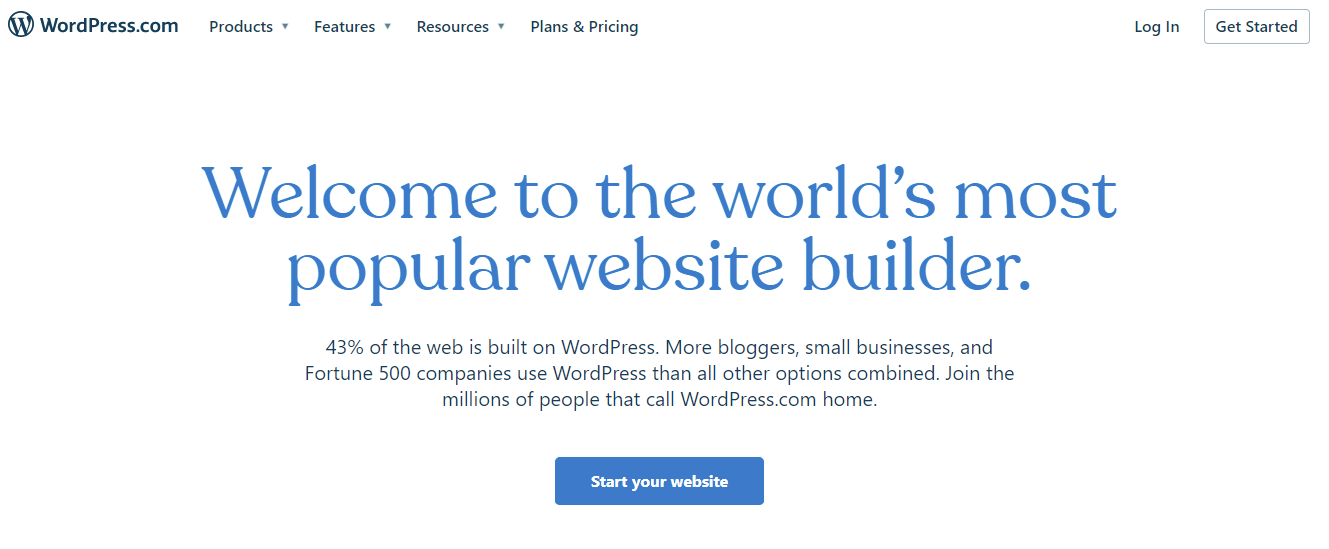
WordPress is a free and open-source content management system, written in the PHP programming language with a MySQL or MariaDB database. This platform is mostly used to create blogs and all types of business websites thanks to WordPress’s massive ecosystem of themes and plugins. WordPress is divided into two versions including WordPress.com( for-profit paid services) and WordPress.org (self-hosted WordPress).
What’s more, WordPress comes with a wide range of free themes and plugins that can help you enhance the functionality and performance of your website. It is really a perfect platform for those who lack technical knowledge.
Drupal
Similarly, Drupal is an open-source CMS( content management system) written in PHP that can power anything from personal blogs to large e-Commerce websites. The Drupal platform was introduced by Dries Buytaert in 2000 and is now widely used in various fields, especially website design. Currently, there are over 1.000.000 websites running on Drupal. This is truly a digital experience management system to enhance your web content, multiple-channel and personalized experiences. Further, it also helps your organization connect with users, clients, and visitors wherever they are.
Themes and plugins
WordPress
Although a large number of themes and plugins doesn’t necessarily mean WordPress is better, it is still a significant indicator of the scale and the importance of the third-party WordPress ecosystem.
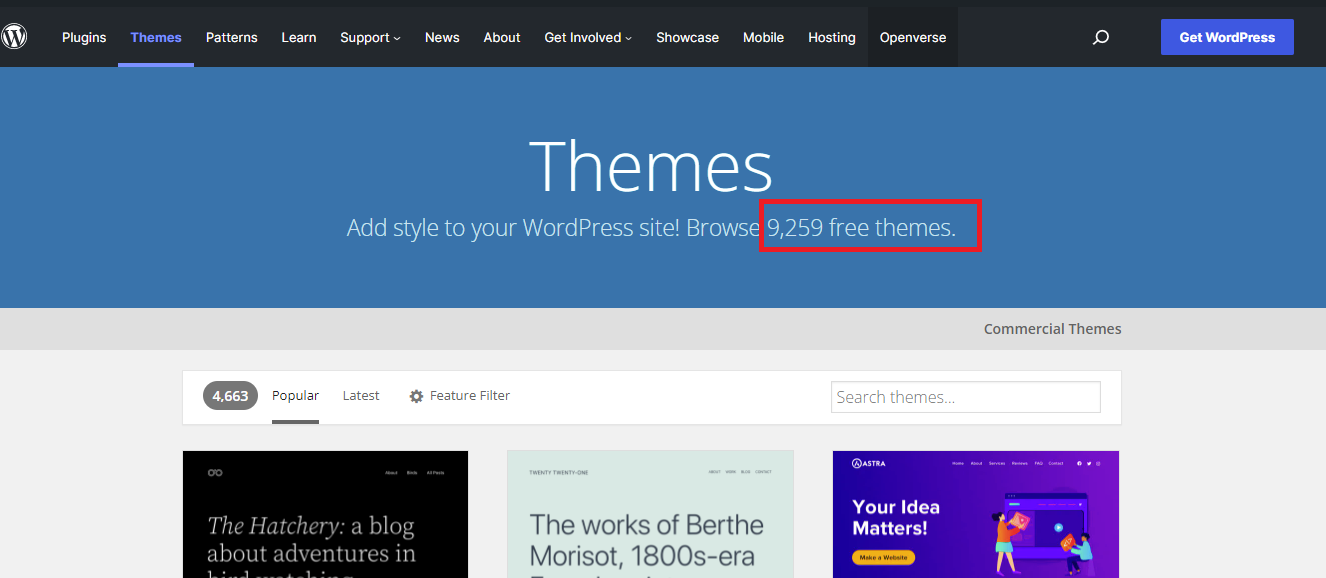
Currently, WordPress.org has 59,461+ free plugins and 9,259 free themes. In addition, there are thousands more premium themes and plugins that can be used to enhance your site functionality.
Drupal
In contrast, the number of modules and themes on Drupal.org is lower than on WordPress. In its official directory, Drupal shows a total of 3,002+ themes and 48,268+ modules.
Ease of use
WordPress
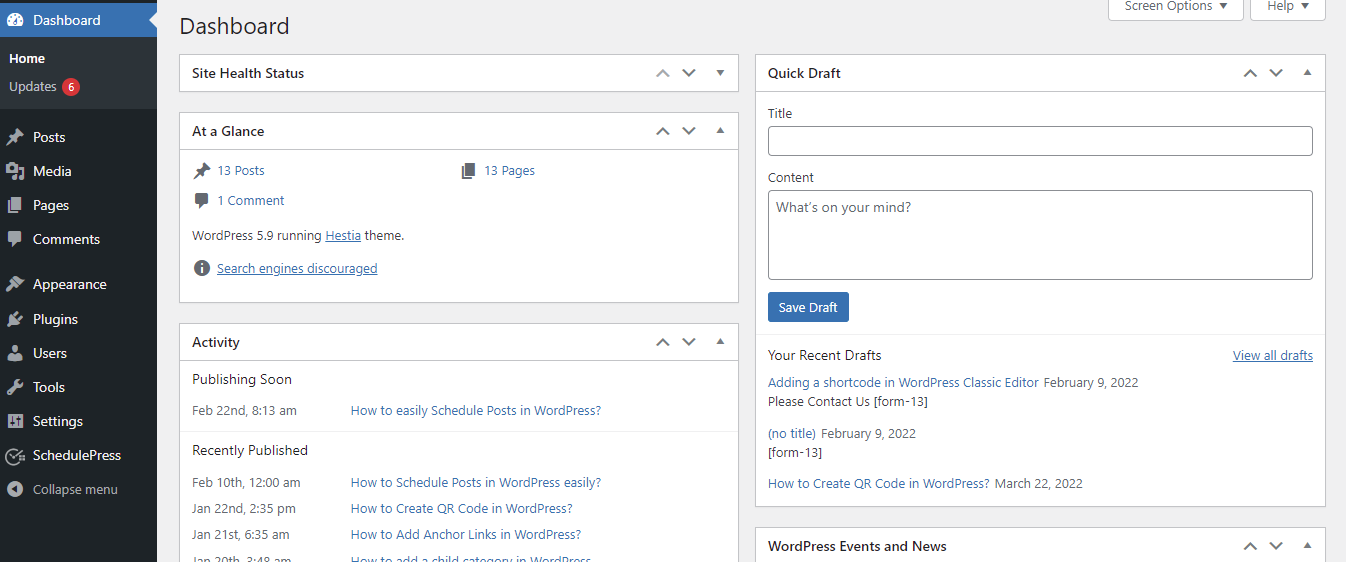
WordPress is well-known for its easy-to-use interface; it only takes a few minutes to start your WordPress site. What’s more, it has a visual and simple dashboard that offers plenty of menu options displayed in the left sidebar. You can use them to add widgets, add navigation menus, customize the appearance of your website, install plugins/themes, tweak settings, and much more.
Moreover, WordPress has abundant free themes and plugins that are extremely easy to use. They come with a wide array of useful features to help you build your desired website without writing a single line of code. However, there are a lot of plugins that have the same or similar features, making it hard for you to choose among them.
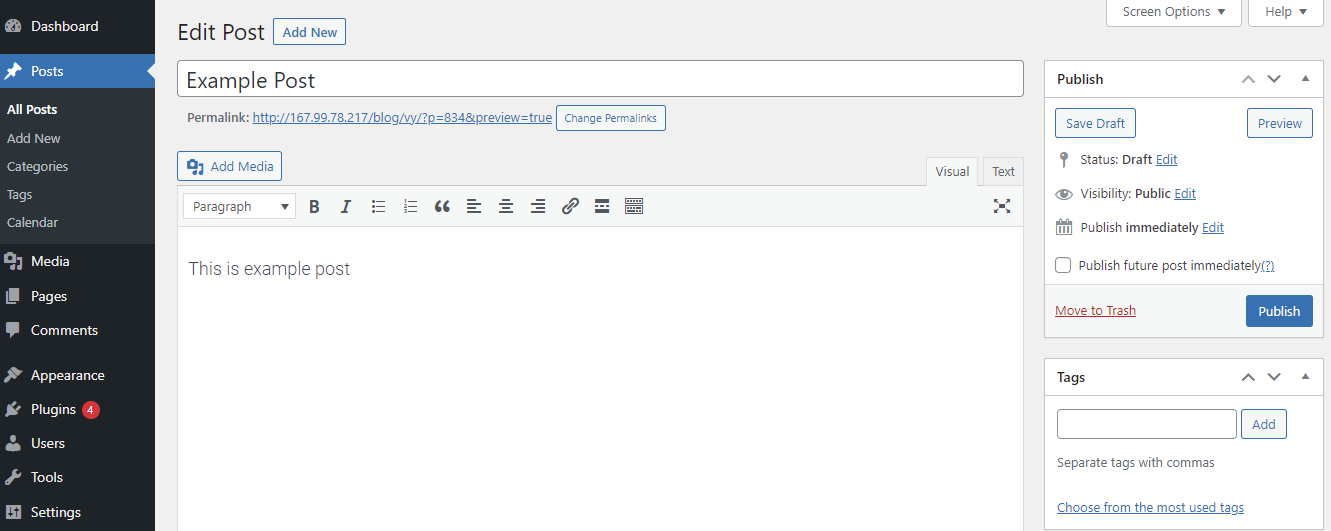
Creating a post/page is another simple task that you can start from your WordPress dashboard. If you are used to Microsoft Word, the WordPress editor will feel familiar.
Drupal
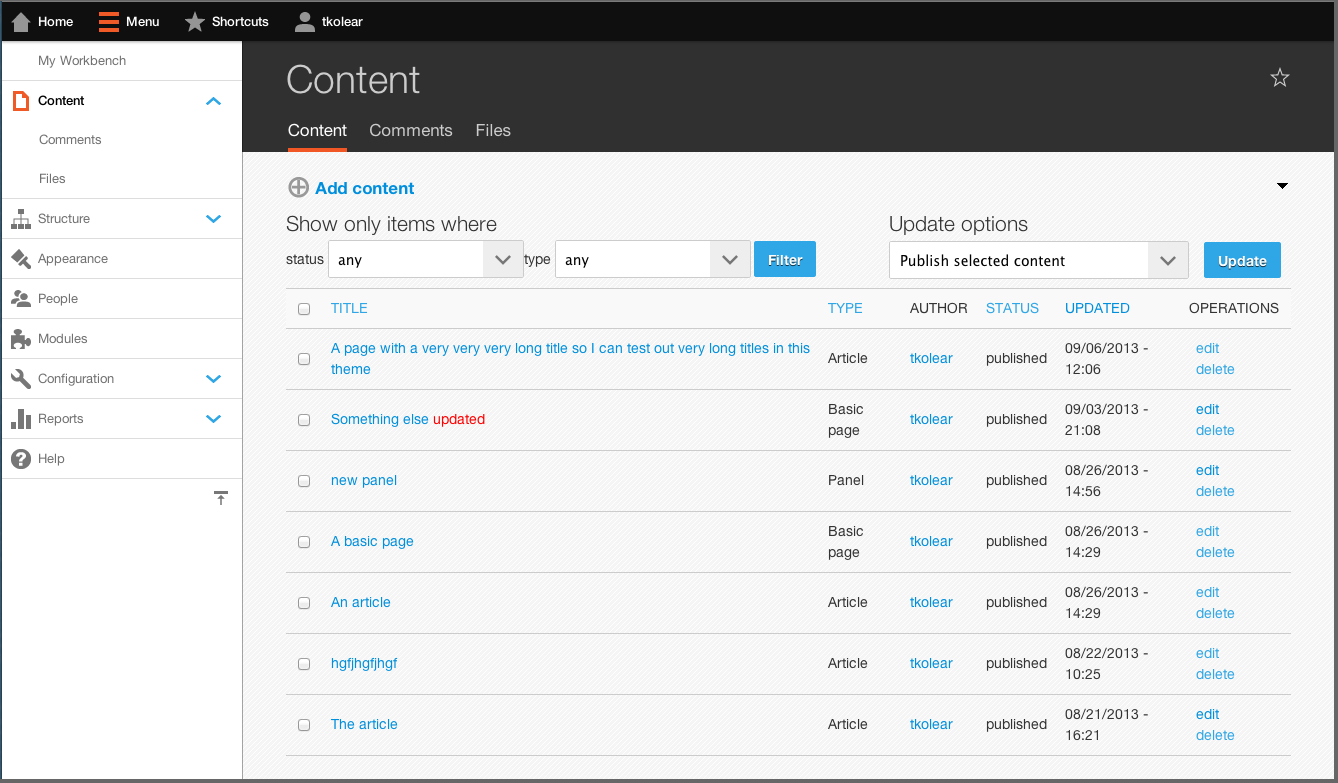
In general, the process of setting up Drupal is as simple as with WordPress. However, many beginners will find it difficult to start compared to WordPress. In terms of interface, Drupal has an intelligent, simple, easy-to-use interface. But the Drupal interface can be confusing for most casual users at first glance.
Besides, you can easily use available options in the menu or even download the necessary modules to complete a specific task such as launching an e-Commerce website.
Security
This is an important criterion that you need to prioritize and consider carefully before choosing any platform for your business. Nothing on the internet can be 100% secure, so you should choose the right platform to give your website the best protection possible.
WordPress
There is no denying that WordPress native code is very secure. However, as more and more plugins and themes are created every day, they also open a lot of unwanted vulnerabilities and security holes. In addition, since it is such a prevalent CMS, it is more vulnerable to hackers. Therefore, when you work with a massive ecosystem of plugins and themes, it is necessary to consider them thoughtfully before installing them.
Plus, you have to be ready to take responsibility for everything including keeping up with the latest version of WordPress, plugins, themes, and making sure your server is configured properly. Despite the fact that some of this may be automated, you still have to monitor and manage it regularly, or else your site may be attacked by hackers.
Drupal
In contrast, Drupal is more secure. This platform always prioritizes the security of your website and has high security standards. Moreover, Drupal doesn’t offer too many themes and plugins, so hackers don’t have a lot of opportunities to add malicious code. This is one of the biggest advantages of this platform.
Website Loading Speed
Owning a lightning-fast website is a necessary factor if you want your website to get a higher ranking on search engines as well as improve users’ experience on your website. You may have the most beautiful website in the world, but it will be worthless if your site visitors don’t stay on your site. Below, we will consider the performance of each platform.
WordPress
Speed is one of WordPress’s notable problems. Although it is not impossible to make it faster, many webmasters don’t optimize their websites properly. One of the main reasons is that your website uses too many poorly programmed plugins and themes. That will certainly make your website slower.
In order to handle this problem, you need to optimize your images, use useful WordPress Cache plugins, use high-quality themes, and finally choose an excellent Web host to optimize your website.
Drupal
On the contrary, using Drupal can help speed up your website effectively, because this CMS is extremely lightweight, which ensures your server always responds quickly.
Moreover, you can use additional extensions to extend the functionality of your website and improve its speed, such as by enabling website caching. This will help you run your website with tons of pages smoothly. However, Drupal requires solid technical knowledge to configure settings correctly so that your website achieves the ultimate performance.
Cost
WordPress and Drupal are both 100% free in themselves, and of course, you can easily download and install them. Nevertheless, there is still an additional cost for both platforms if you want to own a professional website. You may need to pay extra costs for modules, plugins, themes, a domain name, and hosting.
Here are the costs you need to pay when you use WordPress.org:
- Web hosting: from $4/month
- Domain name: $12/year
- Plugins: range from $0-$1,000
- Themes: $0-$250
- Developer fees: range from $0 – $1,000
Similarly, you need to pay for the following services when using Drupal.
- Web hosting: from $3/month
- Domain name: $10/year
- Plugins: $0-$100
- Themes: $0-$80
Pros and cons
WordPress
| Pros | Cons |
|
|
Drupal
| Pros | Cons |
|
|
WordPress Vs Drupal: Final Verdict
As you can see from the aspects mentioned above, both platforms have their own advantages and disadvantages. However, it is really difficult to say exactly which is better. It depends on the specific website you are building. We highly suggest using the Drupal platform to build your website if your website contains a lot of important data. In addition, Drupal is also a perfect solution if you are looking for a good platform with excellent speed and performance.
On the other hand, if you want a cost-saving and easy-to-use solution, don’t hesitate to choose WordPress. This platform is a great choice for building a website to introduce your company, products, blog, sales, and other websites. Moreover, regardless of your web development experience, WordPress is the best option for those who want a simple site with loads of functionality.
And what is your opinion? Have you ever used one of them? If so, share your experience and point of view with us. Hopefully, this blog gives you insight into the differences between WordPress and Drupal. If you have any questions, please leave a comment below.
Further, you can spend a little time visiting our Free WordPress Themes to discover plenty of stunning, responsive, SEO-friendly designs.